會員專享
會員專享 


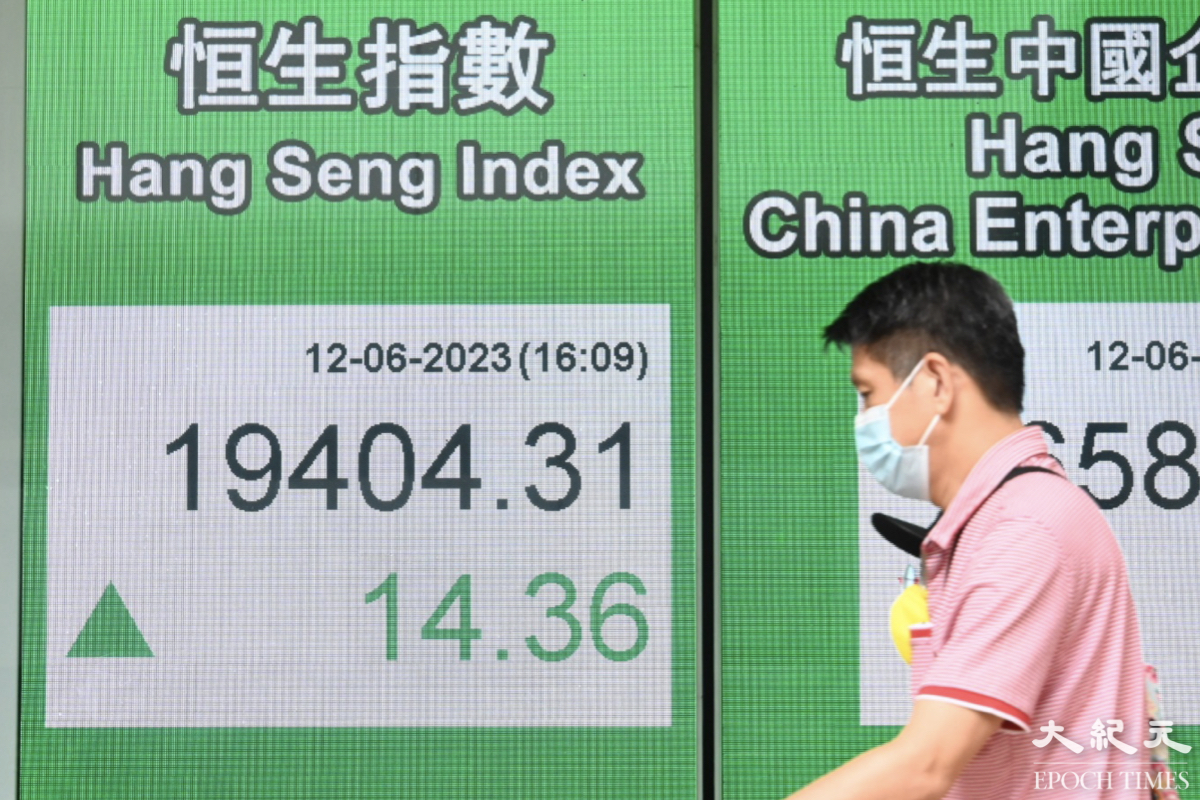
Comparing the performance of 16 years prior and
after the handover, Hang Seng Index showed a significant difference.
BY STACEY TONGTHE EPOCHTIMES STAFF
Since Leung took office, with the exception of its initial rise following the
desirable market situation, the Hong Kong stock market has suffered continuous
shocks especially recently. Monday last week it even dropped below the
20,000-point mark. Although it has recovered somewhat but the Hang Seng index is
bound to fall nearly 10% this year making Hong Kong’s ranking second to the last
in the region while Mainland China rank last.
Leung’s economic policy is without much thought of how Hong Kong should handle
itself but blindly following Mainland China which is not the right way.
Following the wrong step that Mainland China has been going causing it to be the
most risky market around the globe.
Senior renowned analyst and writer Richard Duncan said a few years ago during
the Lyon Investment Conference that China faced much more serious problems than
the US; he even held a serious debate of the point with Fidelity’s Anthony
Bolton in the conference. The result is that Duncan’s prediction is right at the
point; Bolton announced his retirement plan earlier and left the Chinese
financial market disappointingly.
Looking back the past year, the world had endured endless major economic
happenings, each region encountered its own multiple challenges; for example,
the ending of QE in the US, the debt issues in Europe’s Greek and Cyprus and the
high inflation in India are critical and serious issues. Hong Kong has its own
problems like the overpriced real estate market, however, it is not a serious
issue compared with the problems faced by other regions. It is a pity that Leung
did not resolve any of Hong Kong’s important issues on the contrary, his policy
increased chaos and complexity to Hong Kong’s financial market due to the
bearish market which made Hong Kong’s stocks underperform compare to the US, and
also worse than that of Greece and Spain.
Contrarily, the assumed real estate market price falling didn’t happen.
According to Centa-City Index (CCL), the high-end real estate price has
increased 15%, at the same time consumer income increased only 6% during Leung’s
time in office. What can prospective buyers do? The two plots that were designed
and promoted as “Hong Kong land for Hong Kong people” were sold at a high price
of HK$ 4.5 billion to a Chinese developer China Overseas (00688). Those real
estate properties were meant for Hong Kong residents only. It was obvious that
the deal was letting hard-earned money by Hong Kong people to flow into the
pocket of Mainland enterprises.
Leung messed up both the stock and the real estate market, but the staff and the
people who worked with him endured disgrace; it is very unfortunate especially
for those newly joined professionals who have nothing to do with it. We have
given Leung a year’s time for his policy, time is up and we can clearly see that
he is not a competent executive.
Some retail investors believed that Hong Kong would benefit from the handover to
China, the market would have its run following the rise of China. The boom
lasted for a very short period. In the past 16 years, Hang Seng Index had
underperformed the US, European, Korean, Austrian and Indian market. As a matter
of fact, it would be hard to find another market that performed so poorly, maybe
only Japanese market.
Comparing the performance of 16 years prior and after the handover, Hang Seng
Index showed a significant difference. Hang Seng Index increased a mere 37%
undergoing three executives Tung, Tsang, and Leung vs. an 800% increase in the
past; there is no comparison.
In fact, it is not well known but large holders and investment experts have been
reducing their holdings of Chinese and Hong Kong stocks because numerous
problems exist in the environment; however, the media is blocked and truth
cannot be told. But large holders going through global information center can
learn the truth sooner with more accuracy, 9 out of 10 of those in the fund
industry take bearish view of Chinese and Hong Kong stocks. According to Merrill
Lynch latest statistics, compared with the baseline, the percentage of Chinese
market stocks held by the global fund industry is ranked second to the last.
-------------------
局勢持續演變
與您見證世界格局重塑
-------------------
🔔下載大紀元App 接收即時新聞通知:
🍎iOS:https://bit.ly/epochhkios
🤖Android:https://bit.ly/epochhkand
📰周末版實體報銷售點👇🏻
http://epochtimeshk.org/stores